
Last updated November 25, 2026
 Sweep & inspection
 Caps & crowns
 Flue relining
 Masonry repair
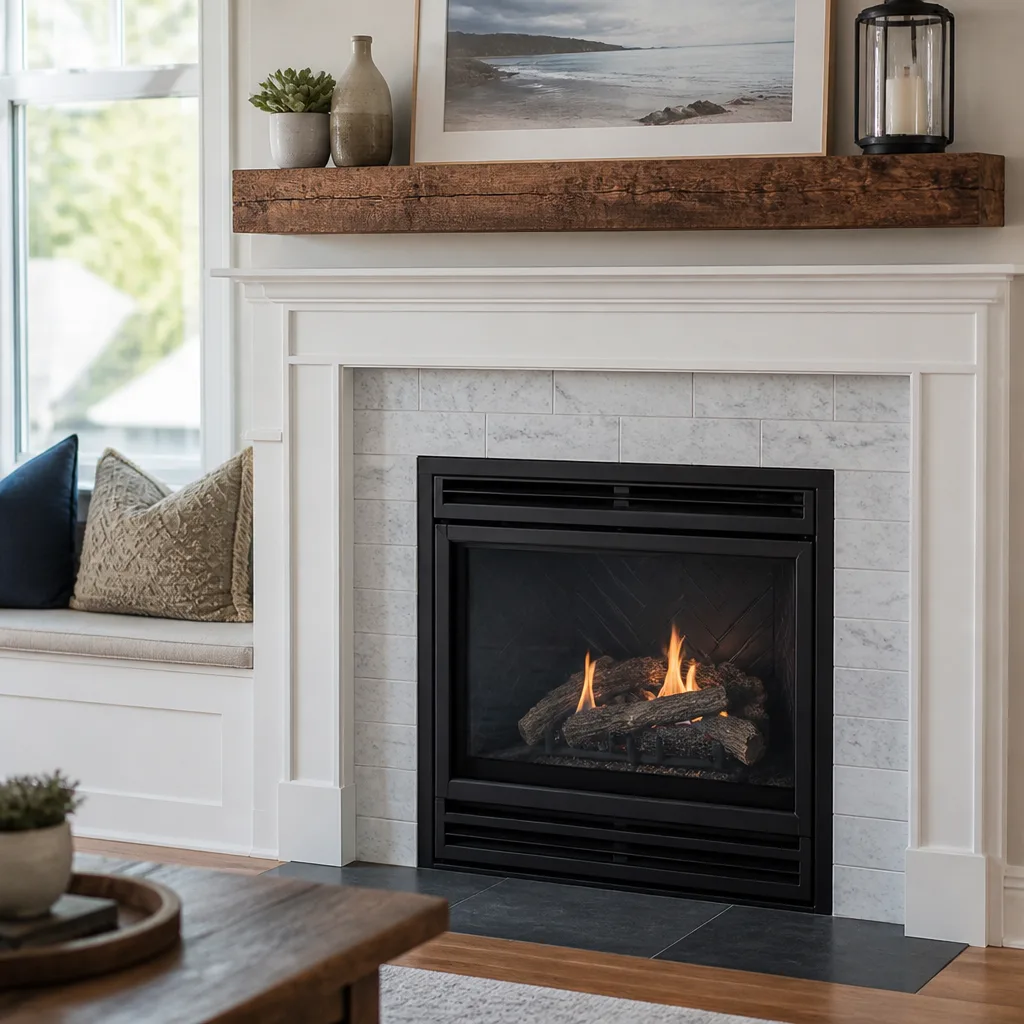 Gas fireplace service
Level 1 sweep and inspection to the NFPA 211 annual standard - flue, crown, cap, and flashing checked and photographed
Chimney sweep logs do not sweep chimneys. They loosen some creosote - which then falls where a brush and vacuum still have to collect it.
Chimney Sweep Maintenance Checklist for Pleasant Grove Homeowners
Most chimney maintenance checklists online tell you to “look for cracks” and “check the damper.” That advice sounds responsible and helps no one, because nobody explains what a failing crown actually looks like, what a damper seal has to do with carbon monoxide, or which parts of a chimney you can honestly evaluate from the hearth and which need a camera. The checkpoints that prevent chimney fires and CO events are specific and tied to individual components most homeowners have never been shown. This guide gives Pleasant Grove homeowners a component-by-component checklist that mirrors how a sweep actually works through a system, so you know what to look at, what it means, and when to stop looking and call.
Quick Answer
A working chimney checklist covers seven components: crown, cap, flashing, flue liner, damper, smoke shelf, and firebox floor. You can visually inspect the crown, cap, flashing, damper, and firebox floor yourself. The liner, smoke shelf, and creosote buildup require a camera scan and a hands-on sweep by a specialist. In Pleasant Grove, book that specialist visit in September, before the short but intense North Texas burn season starts.
Styles & brands we work with
- Sweep & inspection
- Caps & crowns
- Flue relining
- Masonry repair
- Gas fireplace service
Table of Contents
- Why a Component Checklist Beats an Annual Reminder
- The Seven-Point Pleasant Grove Chimney Checklist
- What You Can Check Yourself vs. What Needs a Camera
- How Often to Inspect: A Usage-Frequency Table
- Why September Is the Right Month in Pleasant Grove
- What Each Failure Actually Causes
- Common Mistakes to Avoid
- When to Call a Professional
Why a Component Checklist Beats an Annual Reminder
A chimney is a system, and like any system it fails at its weakest point, not its most visible one. “Get an annual sweep” as advice misses the point. What actually matters is which component is degrading, how fast, and what the consequence of that specific failure is. A crown crack and a glazed creosote layer are both problems, but one lets water into your flue and the other is fuel sitting inside it. Same chimney, two different risks, two different timelines for acting.
We built this checklist around the way we actually evaluate a system top to bottom: cap and crown at the top, liner and flue in the middle, fireplace structure at the bottom. When you know the components in the order a sweep inspects them, the annual visit stops being a box-check and becomes a real conversation. You’ll understand what a technician is pointing at, and you’ll know when a recommendation is urgent versus when it can safely wait.
That matters most for homeowners who want the whole chimney addressed correctly the first time instead of piecemeal fixes from three different contractors. Your fireplace is only as safe as its weakest component, so this guide follows the components.
The Seven-Point Pleasant Grove Chimney Checklist
Work through these in order. Each item has a pass/fail criterion, not just “check it.” If any single item fails, note it and move on to the next; you’ll decide together at the end whether to call.
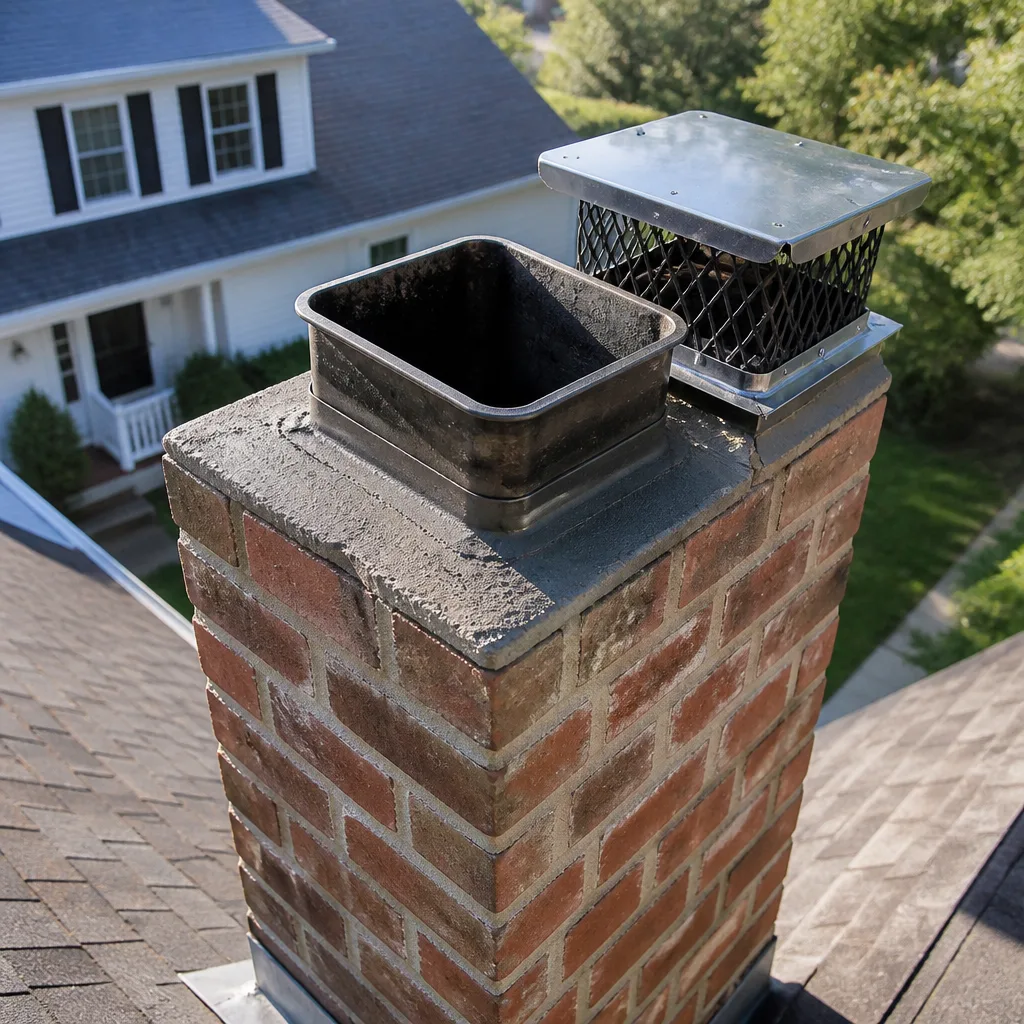
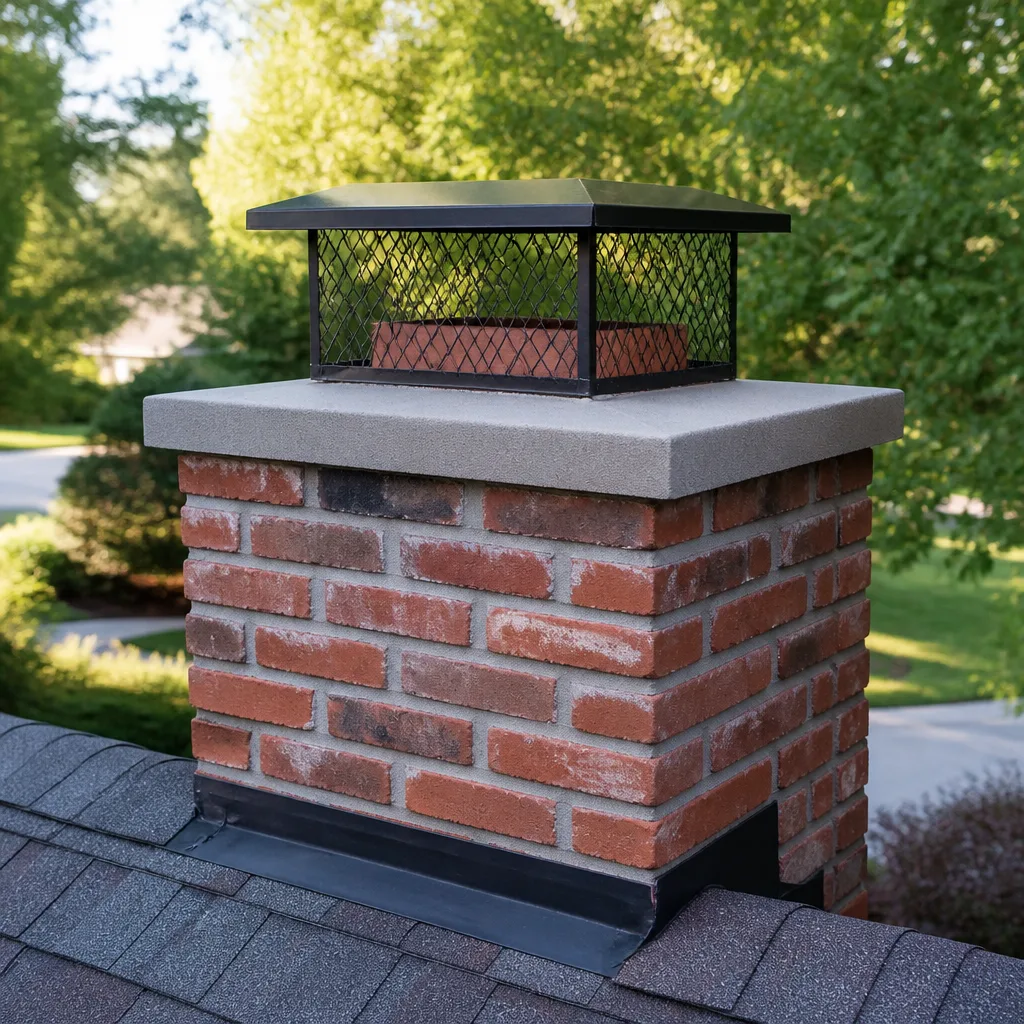
- Crown. Pass: a smooth, continuous concrete surface with no gaps where it meets the flue. Fail: cracks wider than a hairline, a crown that’s crumbling or separated from the flue, or visible water staining below it. The crown is the most common source of water-driven masonry deterioration, which is why we treat chimney cap & crown work as preventive maintenance, not repair for later.
- Cap. Pass: a screen-and-cap assembly fully covering the flue opening, screen intact, no gaps. Fail: missing cap, rusted-through top, torn screen, or a cap that’s slipped off-center. A failed cap lets rain, birds, and debris straight into the flue.
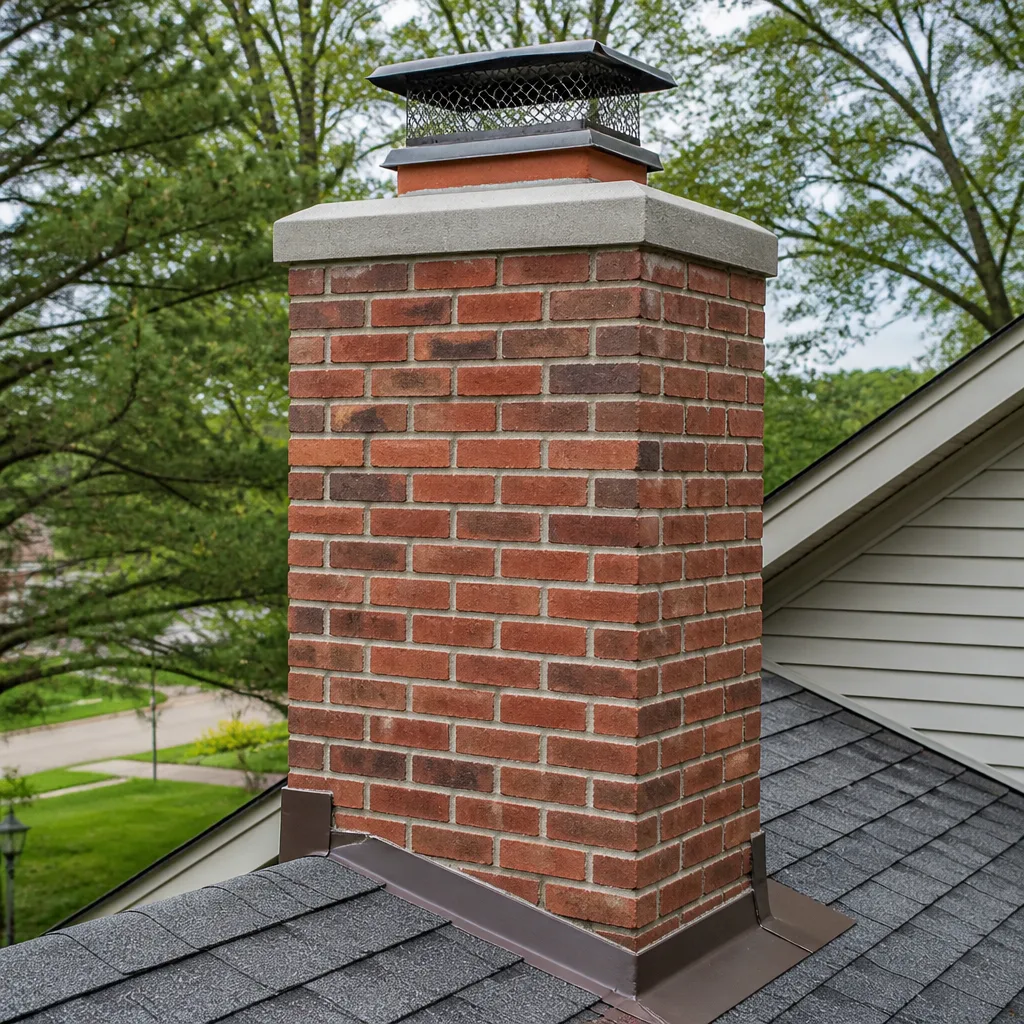
- Flashing. Pass: metal sealed tight against the roof and the chimney stack, no lifted edges, no gap where roof meets masonry. Fail: loose or pulled flashing, visible separation, or a past water stain at the roofline. This is a roof-level check; binoculars from the yard are fine, a ladder is not.
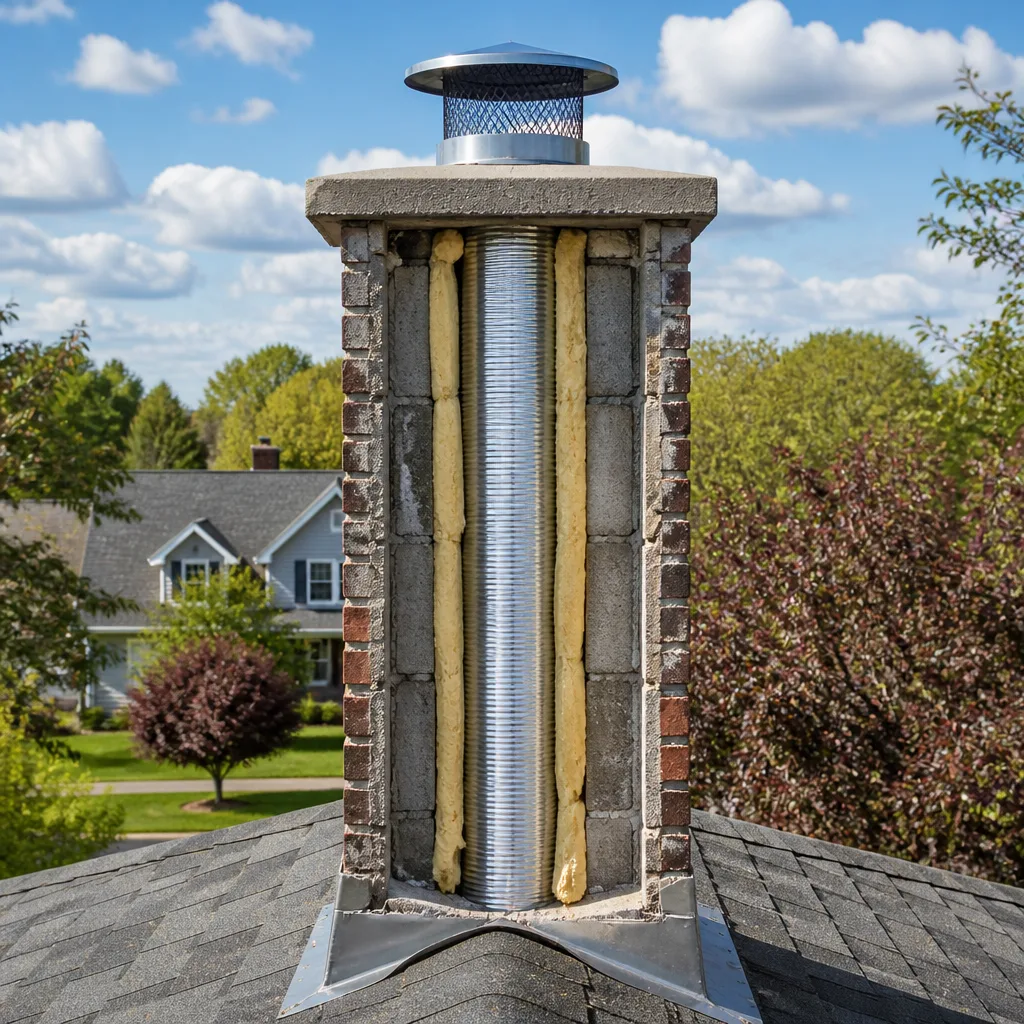
- Liner. Pass: continuous, intact flue tile with no gaps, no missing pieces, no visible cracks. Fail: cracked or spalling tile, gaps between tiles, or heavy buildup. You cannot verify this from below. It needs a camera scan.
- Damper. Pass: opens and closes smoothly, sits flush when closed, no rust holding it open. Fail: sticking, warped, or a damper that won’t seal flat. A failed damper seal is a CO backdraft risk when the fireplace is idle.
- Smoke shelf. Pass: clear of debris and soot, no heavy buildup, no animals nesting. Fail: blocked or heavily coated. This shelf sits just above the damper and traps what falls, so it needs a hands-on look and a sweep to assess properly.
- Firebox floor. Pass: solid mortar joints, no loose bricks, no cracks through the firebrick. Fail: any crack that goes through the brick, crumbling mortar, or a floor you can move with your hand.
Run this list once yourself at the start of the season. It’ll tell you which items to raise with a specialist, and which ones you can leave alone for a year.
What You Can Check Yourself vs. What Needs a Camera
Some checkpoints are honest homeowner visual inspections. Others are not, no matter how confident you feel. Getting this line right is the difference between a useful checklist and one that puts you in danger.
Safe to check yourself:
- Crown condition (from the ground with binoculars)
- Cap presence and condition (from the ground)
- Flashing condition at the roofline (from the ground)
- Damper operation (hands on, no flame)
- Firebox floor and visible firebrick joints (hands on, no flame)
Requires a camera scan or a hands-on sweep:
- Flue liner integrity, top to bottom
- Creosote buildup level and whether it’s glazed
- Smoke shelf clearance
- Any tile joint gaps behind the visible firebox
- Hidden masonry behind the chimney exterior
The reason is simple: the components that cause fires and CO events live in places you can’t see. No flashlight from the hearth ever reaches the upper flue, and no amount of squinting tells you whether creosote buildup has glazed. A camera scan and a proper sweep are what produce evidence, and we document what we find so you’re looking at the same thing we are. Nothing gets recommended that you can’t see for yourself.
One safety caveat worth saying plainly: never climb onto a roof or open the firebox to inspect the liner yourself, and never work around a live flue. Those components need a trained professional.
How Often to Inspect: A Usage-Frequency Table
The right inspection interval depends on how much you burn, not on a calendar you inherited from a previous house. A fireplace that’s used hard needs more attention than one that’s mostly decorative. Here’s how we’d map it for a Pleasant Grove home:
- 0 uses per season (decorative only): Visual check of crown, cap, flashing, and damper once a year. Sweep only if you notice a problem or burning odor.
- Up to ~10 burns per season: Annual visual inspection. Sweep every 2 seasons unless you see or smell something.
- 10 to 20 burns per season: Sweep every season before the first burn. Cap and crown check every season.
- 20+ burns per season: Sweep every season, and ask for a camera scan of the liner at least every other season. Glazed creosote is a real risk at this usage level.
- Burning unseasoned or soft wood: Add a mid-season visual check for creosote buildup, regardless of burn count.
- Gas fireplace: Annual inspection of the flue, damper, and venting. The risks are different, but they don’t disappear.
Why does the number matter more than the calendar? Creosote forms as a function of how much wood you burn and how wet it is. A Pleasant Grove homeowner burning twice a week through December and January accumulates buildup faster than someone who lights a fire on holidays. Same chimney, different schedule. The table above is the fastest way to figure out which one you are.
If you’re not sure where you fall, treat yourself as the higher tier until a sweep tells you otherwise. It’s the safer guess.
Why September Is the Right Month in Pleasant Grove
North Texas has a short but intense burn season. That changes the optimal inspection window compared to regions with long, slow winters. In Pleasant Grove, fires tend to run hard from late fall through February, with a lot of activity packed into a few cold stretches. That compression means any problem has less time to be caught between burns, so the inspection has to happen before the season starts, not during it.
September is the sweet spot for three reasons:
- You’re ahead of the season, not in it. A problem found in September can be scheduled and fixed before you need the fireplace. A problem found in December usually means waiting or burning anyway.
- Creosote from last season is fully settled. It’s had all summer to harden and reach its maximum buildup. A September sweep removes the season’s worth of fuel before it can matter.
- Weather allows it. Pleasant Grove winters are mild, but fall and winter rain and wind are common enough that you want the crown, cap, and flashing verified before they take the stress. Roof-level checks are more reliable when they’re not fighting weather.
There’s a safety reason too. If the cap has failed or the crown has cracked over the summer, September gives you time to fix it before water works its way into the liner. Left through a wet fall, that water becomes structural. We built our Chimney Sweep Pleasant Grove visit to catch exactly these fall-season issues, and it’s the reason so many Pleasant Grove homeowners book in September rather than after the first cold snap.
If you’ve already missed September, don’t skip it entirely. Get it done before the first real burn. The season doesn’t wait for a convenient schedule.
What Each Failure Actually Causes
A checklist is only useful if the stakes are clear. Here’s what actually happens when each component fails, so you can weigh urgency honestly.
- Failed crown: Water infiltrates downward into the liner and masonry. Over time this spalls brick, erodes mortar, and degrades the flue tile. It’s the most common source of water-driven masonry deterioration.
- Failed cap: Rain, leaves, birds, and debris enter the flue directly. This is a both a blockage risk and a deterioration risk, and the debris competes with proper draft.
- Failed flashing: Water tracks into the roof and the chimney stack at the joint. Staining inside the attic or along the roofline is an early sign.
- Compromised liner: The protective barrier is gone. Heat and gases can reach the surrounding structure, and carbon monoxide can enter the home. This is the finding that turns a maintenance checklist into a safety priority.
- Failed damper seal: When the fireplace is off, a damper that won’t seal flat can allow CO and flue gases to backdraft into the room. This is why a sticking damper is more than a nuisance.
- Blocked smoke shelf: Debris on the shelf disturbs airflow and pushes smoke back into the room, meaning you get poor draft and smoke where you don’t want it.
- Failed firebox floor: Cracks and loose brick allow heat and embers to reach beyond the firebox. This one can escalate quickly, because it’s direct fire contact inside the room.
- Glazed creosote: It’s fuel sitting inside the flue. Glazed creosote is denser and harder to remove than light buildup, and it’s the material that turns a flue into a fire hazard.
Notice the pattern. Water failures work slowly. Heat and gas failures work fast. A checklist that treats them all as “cracks to fix someday” misleads you on what to prioritize. Your liner and damper seal are the ones that can hurt you this season; the crown and flashing are the ones that hurt your chimney over years. Both belong on the list, just not at the same urgency.
Common Mistakes to Avoid
- Judging the liner from the firebox. A clean firebox says nothing about what’s above it. The liner is only verified with a camera scan, and skipping that step is how small tile gaps become big problems.
- Skipping the crown and cap because they’re “up there.” The top of the chimney is the most overlooked part of the system, and it’s the source of the most water damage. A failed cap is cheap to notice from the yard and expensive to ignore.
- Burning wet or unseasoned wood. It produces more creosote per burn, which shortens your safe interval regardless of how often you light a fire.
- Using the calendar instead of your actual usage. A decorative fireplace and a heavily used one don’t share a schedule. If you burn hard, sweep more often. If you burn twice a year, don’t over-inspect and don’t under-inspect.
- Treating a sticking damper as a minor annoyance. A damper that won’t seal flat is a CO backdraft risk when the fireplace is idle. Get it looked at, not tolerated.
- Hiring separate contractors for the top, middle, and bottom. The crown, liner, and firebox are one system, and splitting the responsibility between a roofer, a sweep, and a mason is how problems get missed in the handoff.
- Waiting until the first cold snap. In Pleasant Grove, scheduling after the season starts means waiting for a slot when you need the fireplace. September exists for a reason.
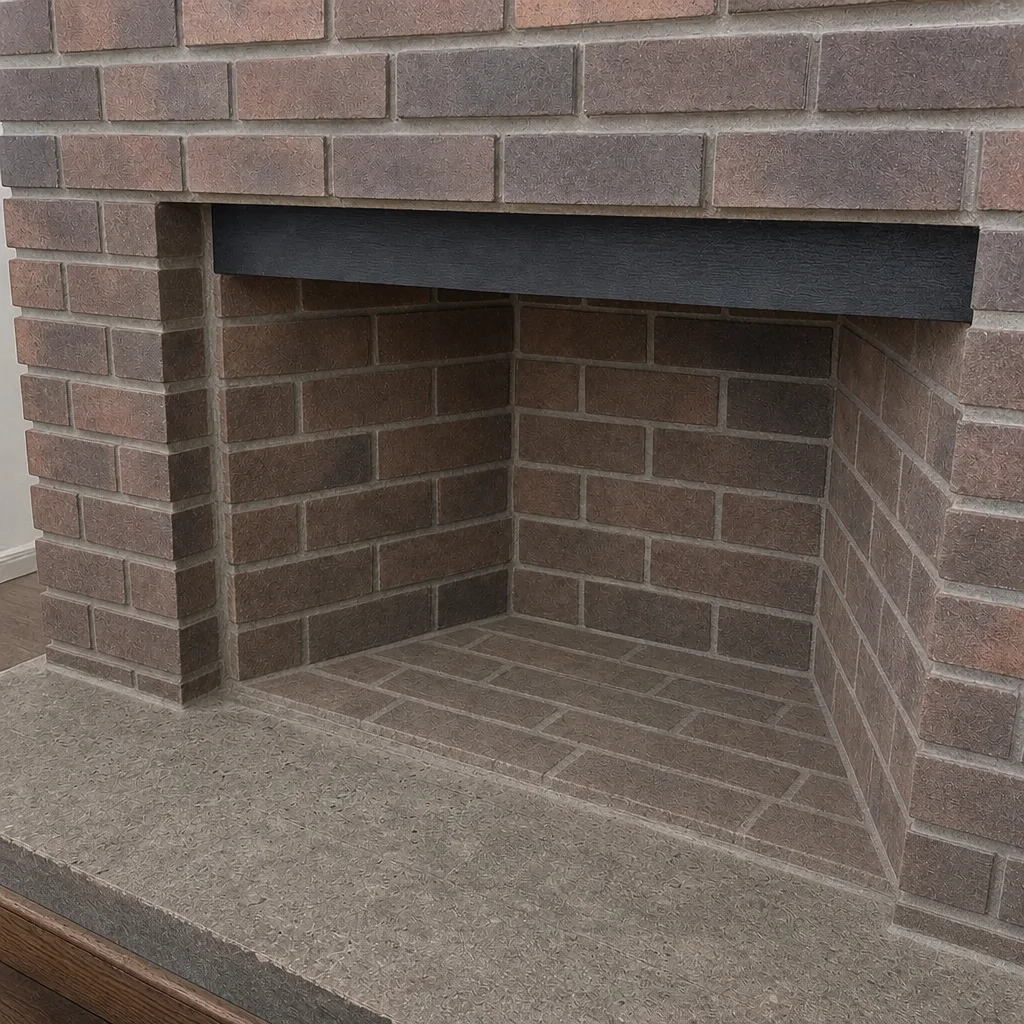
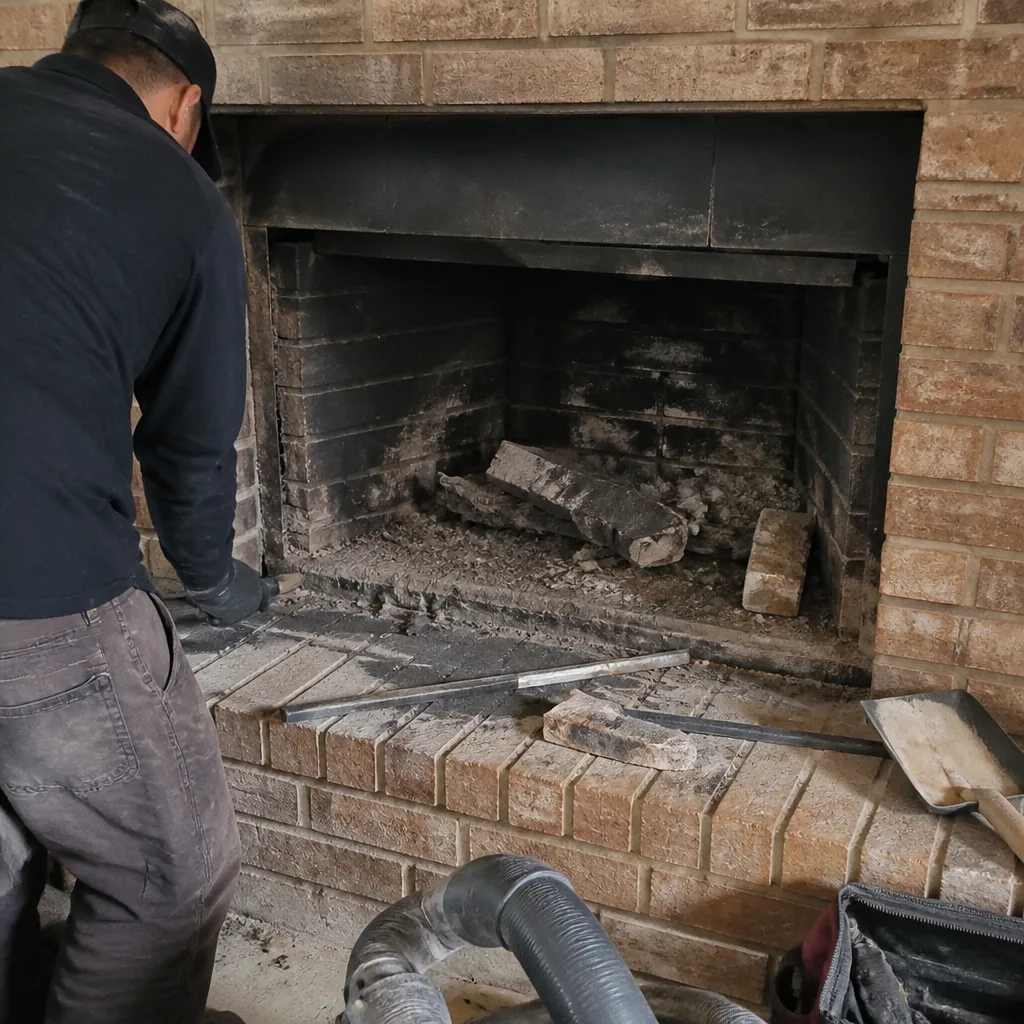
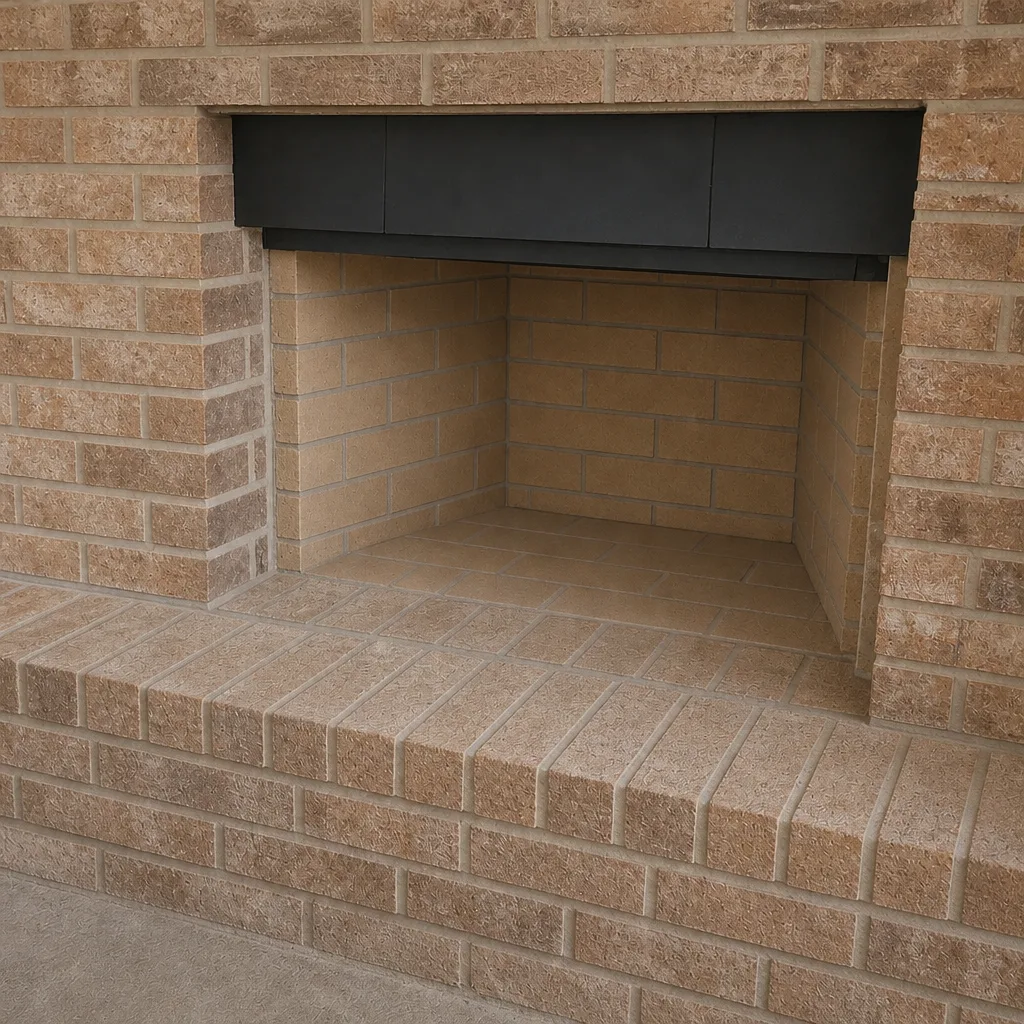
See the difference
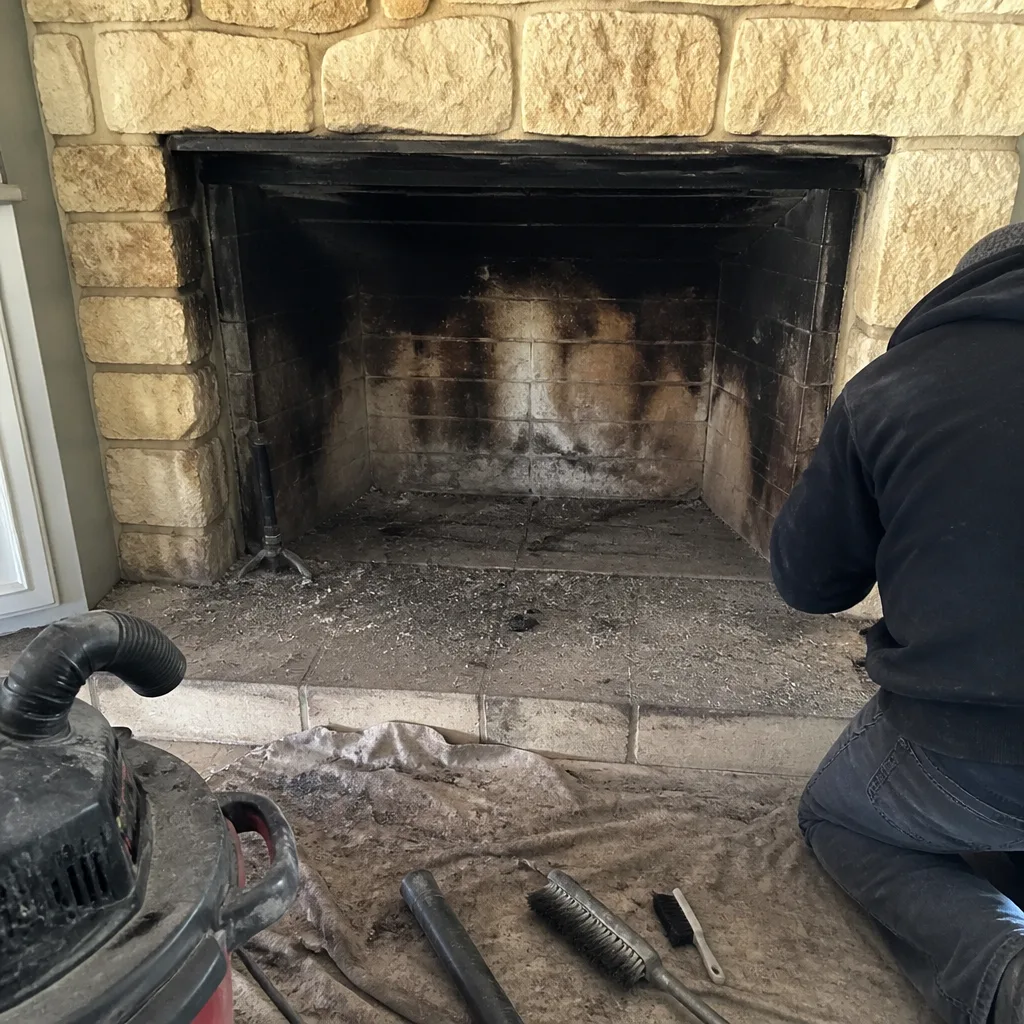 Before
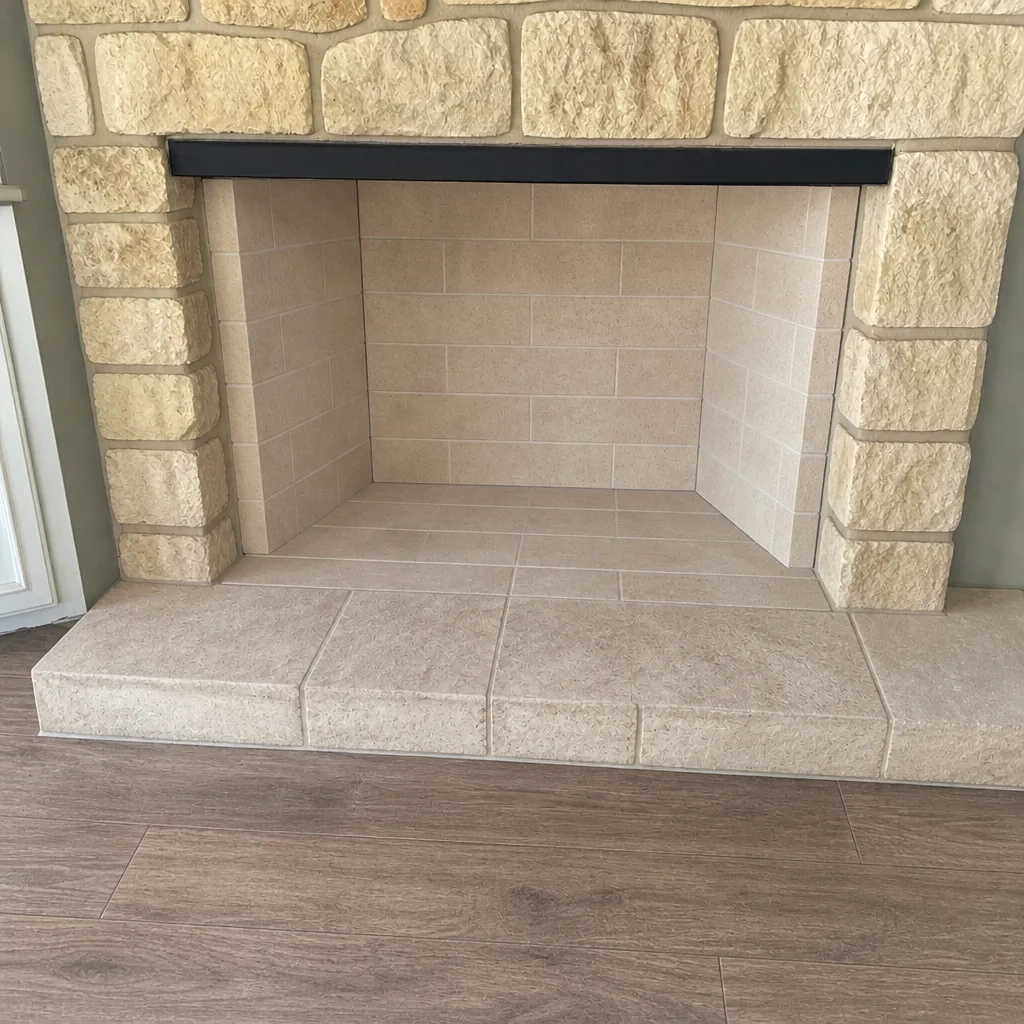 After
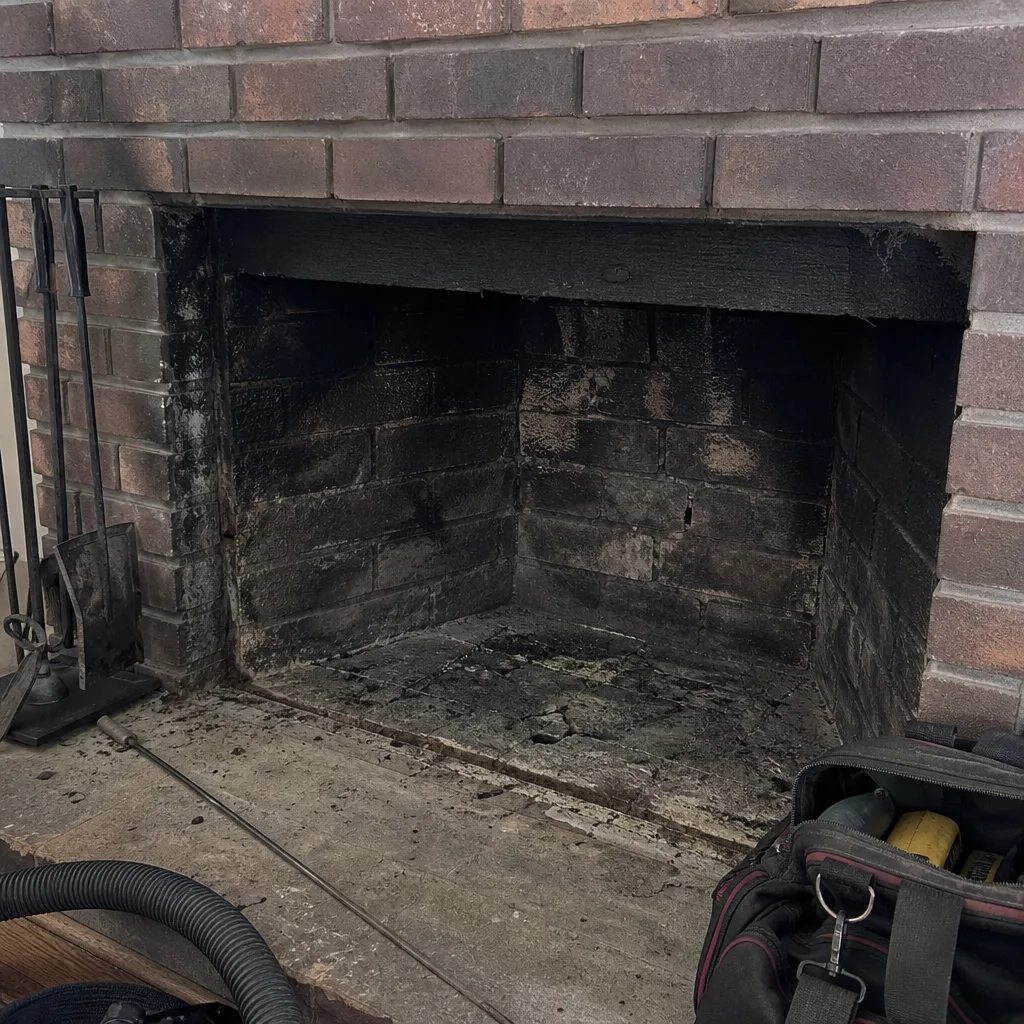 Before
 After
 Before
 After
When to Call a Professional
Some findings are reminders, and some are stop signs. Call a professional if any of the following are true:
- You see a cracked or separated crown, or a missing cap (top-of-system issues)
- Your damper won’t close flat, or the firebox floor has cracks through the firebrick
- You smell smoke in the room when the fireplace is idle, or notice a burning odor with nothing in the firebox
- You can’t remember the last time the liner was scanned
- You burn 20+ times a season and haven’t swept this year
- You see water staining on the chimney or along the roofline
If any of these describe your chimney, don’t run the fireplace until it’s checked. For most everything else, a scheduled September inspection is the right response and there’s no reason to rush a call. Chimney Sweep Pleasant Grove offers free estimates in Pleasant Grove. Call (855) 337-2098. We answer 24/7. Fast dispatch from 7am to 7pm, Sunday through Friday.
When you do call, you’ll get a visit that covers all five of our service categories, from the firebox to the crown, so nothing is left to a second contractor. That includes fireplace repair if the firebox or damper needs hands-on work.
Frequently Asked Questions
Once per season if you burn 10 or more times a year, and every two seasons if the fireplace is light-use. If you burn 20+ times a season, sweep annually and ask for a liner scan every other year. Heavy use in North Texas compresses into a short season, so the safest guess is the higher tier until a sweep tells you otherwise.
You can check the crown, cap, flashing, damper, and firebox floor yourself, all from the ground or from the hearth with no flame lit. You cannot inspect the liner, the smoke shelf, or creosote buildup without a camera scan and a hands-on sweep. Those components are the ones that cause fires and CO events, so they require a trained professional.
It looks like a dark, shiny, hardened layer inside the flue rather than a fluffy soot deposit. It matters because glazed creosote is dense fuel sitting inside your chimney, and it’s harder to remove than light buildup. It forms faster when you burn wet or unseasoned wood, which is why we recommend dry wood and a consistent sweep schedule.
Because the failure isn’t always visible to you. A damper can open and close but still fail to seal flat when closed, which is a CO backdraft risk while the fireplace is idle. You get the visible check; a specialist gets the seal check.
September gives you time to fix what a sweep finds before you actually need the fireplace. Winter in Pleasant Grove is mild but with intense burn stretches, and a December finding usually means waiting or burning anyway. If you’ve missed September, book before the first real burn rather than skipping the season.
Not automatically. A cracked crown lets water into the liner, but water damage is progressive, and a crown repair can stop it early. The right answer depends on what a camera scan shows inside the flue. At times a HeatShield application can resurface a deteriorating flue tile instead of replacing the whole liner, and that’s a repair option worth asking about before assuming the worst. The camera evidence decides; you don’t have to guess.
For any of these, call (855) 337-2098 for an exact quote on what your chimney needs. Estimates are free, and nothing gets recommended without documented findings you can see.
The Bottom Line
A chimney checklist is only useful when it’s specific. Build yours around seven components: crown, cap, flashing, liner, damper, smoke shelf, and firebox floor. You can visually check five of them yourself; the liner, smoke shelf, and creosote need a camera scan and a hands-on sweep. Match your interval to how much you actually burn, not to the calendar, and treat heat-and-gas failures as urgent while water-driven ones get fixed before they spread. Book the sweep in September, before Pleasant Grove’s short, intense burn season, so you’re ahead of the season instead of waiting in it.
When a finding needs hands-on work, you want a specialist who handles the whole system, not three contractors meeting on your roof. That’s what we do. Call (855) 337-2098 for a free estimate. We answer 24/7. Fast dispatch from 7am to 7pm, Sunday through Friday.
Written by the team at Chimney Sweep Pleasant Grove.